Modular Mission Platforms
One 7m or 9m hull, reconfigured mission to mission — a deck built to carry survey, inspection, recovery, or a third party's sensor payload, not a fixed layout designed once and lived with.
Flush-Deck Track Grid Matrix
Aviation-grade anodized aluminum tracks, bedded into structural stringers rather than surface-mounted. The result is a zero-profile deck with high-shear load capacity across the full grid — a mount point anywhere on the deck holds the same load as any other, not just at a handful of reinforced hardpoints.
Interchangeable Sensor Pods
Every pod shares the same track interface and IP68 quick-disconnect power umbilical — the deck doesn't know or care which one is fitted.
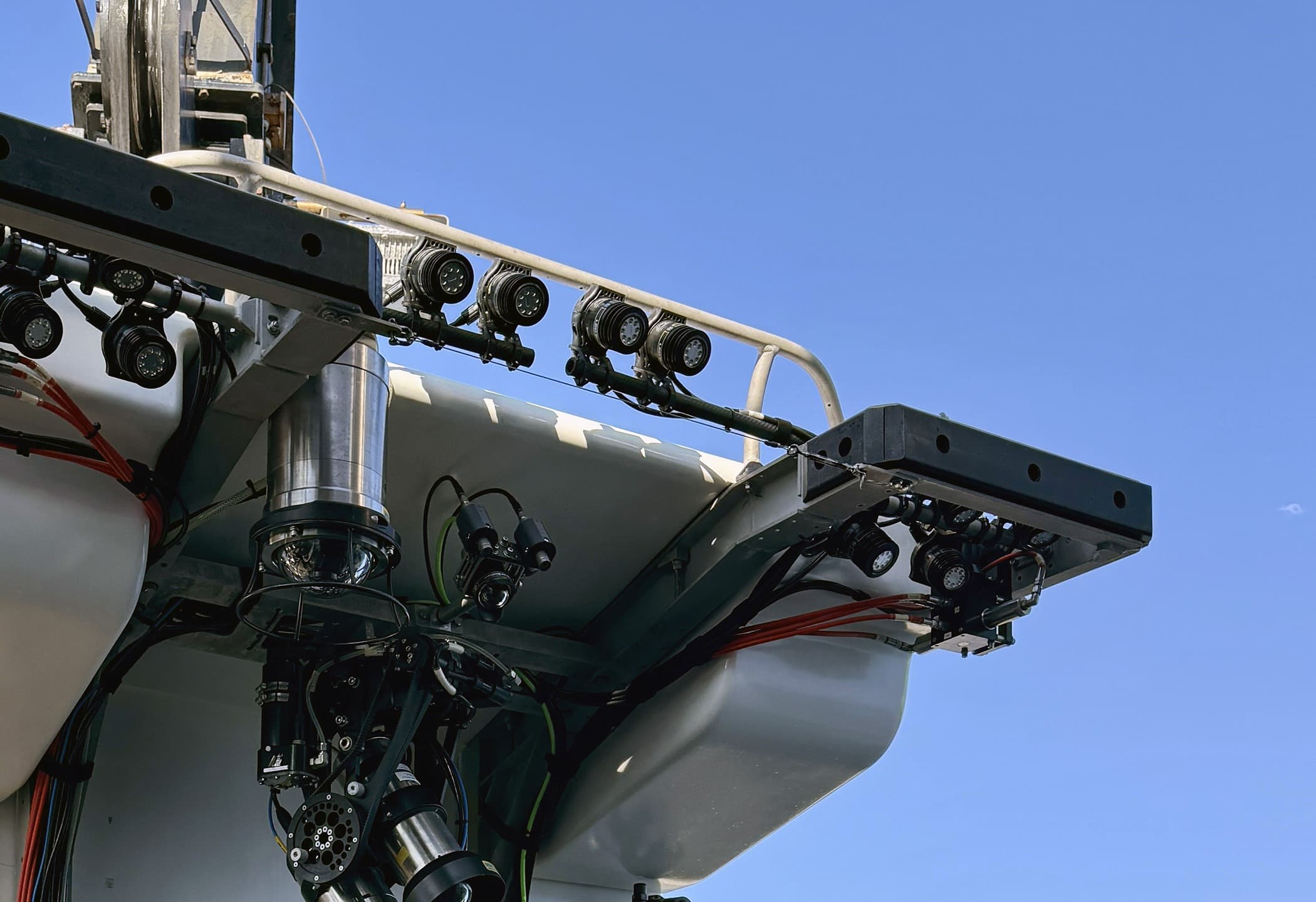
Structural Integrity & Dual-Skinned Engineering
A hybrid monocoque hull with a second, independent skin carrying redundant buoyancy capsules — not a single point of failure between the crew and the water. Stiffness comes from the structure itself, not from added weight, which is what keeps a fully-loaded pod from changing how the hull handles.
Prototype & Testing Fleet
Our prototype platforms operate under EU/Polish commercial registration — every track system and pod covered on this page has been proven on a hull that works for its living, not a one-off demonstrator.
Field-Test Your Own Sensor
For early-stage ocean-tech teams building a sensor payload, the barrier is rarely the sensor itself — it's getting it into open water on a stable, powered, data-connected platform. The Sensor R&D Pod exists for exactly that: mount, power, and log against a proven hull instead of building a boat first. Day-rate deployments with certified technical crew are available for coastal, river, and offshore field-testing programmes.
Run as a Vessel Husbandry or Recovery Job
The Survey and ROV pods are what class-driven hull inspection, in-water UT testing, and biofouling work run on; the Recovery Pod is what a targeted search or disentanglement job runs on. See the Vessel & Maritime Husbandry and Search & Recovery service listings for the full scope of bookable work.